
Blog
One-Stop Veterinary Medical Equipment Sourcing: A Complete Guide for Buyers
Why One-Stop Veterinary Medical Equipment Sourcing Matters
As the global pet healthcare industry continues to develop, veterinary clinics, animal hospitals, pet healthcare centers, and distributors are looking for more professional medical equipment to improve their diagnostic and treatment capabilities.
However, purchasing veterinary medical equipment is not always straightforward. Different devices serve different purposes, require different technical specifications, and may come from different manufacturers.
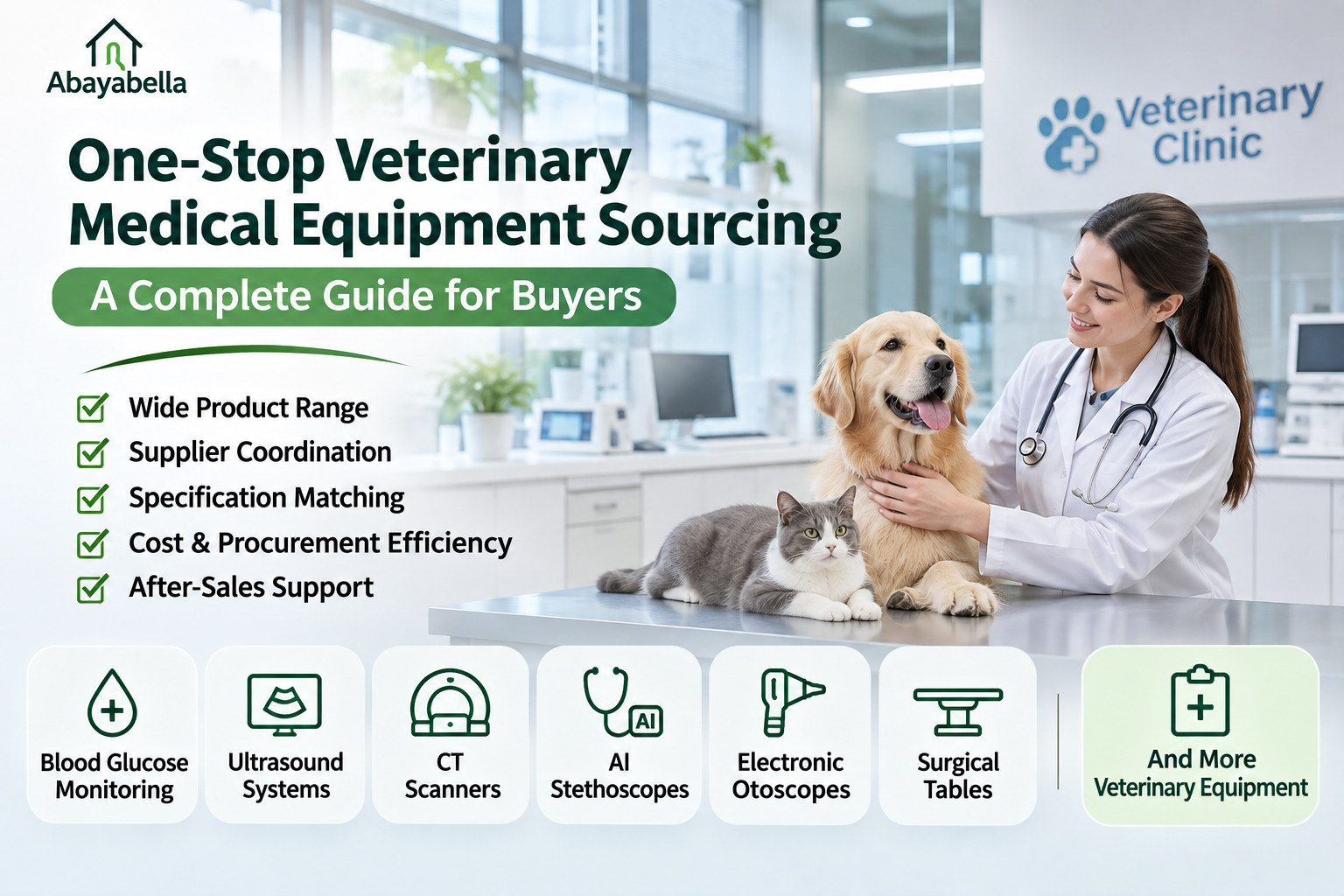
For example, a veterinary clinic may need blood glucose monitoring devices, ultrasound machines, CT scanners, AI-powered stethoscopes, electronic otoscopes, surgical tables, and other medical equipment.
Purchasing these products separately from multiple suppliers can create additional work involving supplier communication, product comparisons, quotations, shipping arrangements, and after-sales coordination.
This is where one-stop veterinary medical equipment sourcing becomes valuable.
Instead of managing every purchase independently, buyers can work with a sourcing partner to coordinate different product categories and explore suitable suppliers based on their requirements.
What Types of Veterinary Medical Equipment Can Buyers Source?
Veterinary medical equipment covers a wide range of diagnostic, monitoring, surgical, and clinical products.
Understanding the main equipment categories can help buyers plan their procurement more efficiently.
1. Blood Glucose Monitoring Devices
Blood glucose monitoring devices are used in veterinary settings to measure and monitor blood glucose levels in animals.
Depending on the application, buyers may consider:
- Veterinary blood glucose meters
- Compatible test strips
- Blood sampling accessories
- Portable glucose monitoring systems
- Related testing supplies
When selecting these devices, buyers should check measurement specifications, sample requirements, compatibility with consumables, operating procedures, and calibration requirements.
For clinics that regularly monitor diabetic animals, the availability and consistency of compatible consumables are also important purchasing considerations.
2. Veterinary Ultrasound Machines
Ultrasound equipment is widely used in veterinary diagnostic settings.
Different systems offer different imaging capabilities, configurations, and levels of portability.
Common options include:
- Portable ultrasound machines
- Cart-based ultrasound systems
- Handheld ultrasound devices
- Different types of ultrasound probes
- Veterinary ultrasound accessories
Before purchasing an ultrasound machine, buyers should evaluate image quality, available imaging modes, probe compatibility, software functions, portability, and the types of examinations the equipment is intended to support.
The right configuration depends on the clinic’s requirements, animal species, examination needs, and budget.
3. Veterinary CT Scanners
CT scanners are advanced imaging systems used in veterinary hospitals and specialized diagnostic centers.
Compared with smaller diagnostic devices, CT systems involve more complex procurement considerations.
Buyers should evaluate:
- Scanner configuration
- Detector specifications
- Image acquisition capabilities
- Image reconstruction software
- Patient positioning requirements
- Installation requirements
- Radiation shielding and safety arrangements
- Technical support and maintenance
CT equipment is a substantial investment. Procurement should involve qualified technical professionals who can assess the equipment’s suitability for the intended clinical applications and facility.
Installation, radiation protection, operator training, and local regulatory requirements should be considered before an order is finalized.
4. AI-Powered Veterinary Stethoscopes
Digital and AI-powered stethoscopes represent an emerging category in veterinary diagnostic equipment.
Depending on the product, these devices may offer digital sound recording, amplification, wireless connectivity, sound analysis, or software-assisted interpretation.
Potential procurement options include:
- Digital veterinary stethoscopes
- Electronic auscultation devices
- Wireless stethoscopes
- AI-assisted sound analysis systems
- Compatible software and accessories
Buyers should pay attention to supported animal applications, audio quality, connectivity, software compatibility, data storage, and the actual functions included.
It is also important to distinguish between sound recording, analytical assistance, and clinically validated diagnostic functions. AI features should not be assumed to replace professional veterinary judgment.
5. Electronic Veterinary Otoscopes
Electronic otoscopes help veterinary professionals examine the ear canal and related structures.
Compared with traditional optical devices, digital models may provide camera-based imaging, screen display, image capture, or video recording.
When sourcing electronic otoscopes, buyers should consider:
- Camera resolution
- Illumination quality
- Image display
- Probe dimensions
- Compatibility with different animal sizes
- Cleaning and disinfection requirements
- Image and video storage functions
The device should be suitable for the intended veterinary applications and compatible with the clinic’s examination workflow.
6. Veterinary Surgical Tables
Surgical tables are essential equipment for veterinary operating rooms and treatment facilities.
Different models may offer different structures, adjustment mechanisms, and accessories.
Common options include:
- Stainless steel veterinary operating tables
- Electric lifting surgical tables
- Hydraulic surgical tables
- Adjustable examination tables
- Tables with drainage systems
- Tables with positioning accessories
Buyers should evaluate load capacity, table dimensions, height adjustment, surface materials, drainage design, stability, and ease of cleaning.
For surgical environments, the table’s construction and materials should also meet the hygiene and operational requirements of the facility.
Other Veterinary Equipment Worth Including in a Procurement Plan
Beyond the major equipment categories, veterinary clinics and animal hospitals may need many complementary products.
A broader procurement plan may include:
Diagnostic Equipment
- Veterinary X-ray machines
- Digital radiography systems
- Patient monitors
- Veterinary ECG machines
- Laboratory analyzers
- Microscopes
Monitoring Equipment
- Veterinary pulse oximeters
- Blood pressure monitors
- Temperature monitoring devices
- Capnography equipment
- Multiparameter patient monitors
Surgical and Treatment Equipment
- Veterinary anesthesia machines
- Surgical lights
- Electrosurgical units
- Infusion pumps
- Oxygen concentrators
- Suction machines
Examination and Clinical Equipment
- Veterinary examination tables
- Examination lights
- Electronic weighing scales
- Dental equipment
- Veterinary cages and recovery equipment
Consumables and Accessories
- Medical tubing
- Sensors and probes
- Replacement parts
- Testing supplies
- Protective accessories
- Device-specific consumables
The exact product list should depend on the facility’s services, purchasing budget, and equipment specifications.
How to Choose the Right Veterinary Medical Equipment Supplier
Finding suppliers is only the beginning of the procurement process. Buyers also need to evaluate whether the suppliers can provide suitable products, technical documentation, and reliable support.
Here are several important factors to consider.
Product Specifications and Technical Requirements
Before requesting quotations, prepare a clear list of technical requirements.
For example, when purchasing an ultrasound machine, buyers should specify the required imaging functions, probe types, display configuration, and intended applications.
For CT scanners, more detailed technical evaluation is necessary.
A quotation should be compared against the actual specifications rather than just the product name or advertised features.
Manufacturer Qualifications and Documentation
Buyers should verify the manufacturer’s identity, product documentation, applicable registrations, and regulatory status in the intended destination market.
Depending on the product and country, relevant documentation may include:
- Product technical specifications
- User manuals
- Quality management documentation
- Applicable conformity documents
- Product registration information
- Warranty documentation
- Certificates required by the destination market
Do not assume that a device is approved for veterinary use or import simply because a supplier can provide a quotation.
Requirements vary by product classification and destination country.
After-Sales Service and Technical Support
Medical equipment is different from ordinary consumer products.
A device may require installation, calibration, maintenance, software updates, operator training, or replacement components.
Before purchasing, buyers should clarify:
- Warranty period
- Technical support availability
- Spare parts availability
- Maintenance arrangements
- Installation responsibilities
- Training services
- Response times for technical problems
For complex equipment such as CT scanners and ultrasound systems, after-sales support should be considered a major part of the purchasing decision.
Price and Total Procurement Cost
The lowest equipment quotation does not necessarily represent the best purchasing decision.
Buyers should consider the total cost, including:
- Equipment price
- Accessories and optional configurations
- Shipping and insurance
- Import duties and taxes
- Installation
- Training
- Maintenance
- Consumables
- Spare parts
Comparing the total procurement cost provides a more realistic basis for evaluating different suppliers.
Why One-Stop Veterinary Medical Equipment Sourcing Can Be More Efficient
A veterinary clinic may need equipment from several different product categories, and each category may involve a different manufacturer.
Managing all these suppliers independently can increase procurement complexity.
A one-stop sourcing approach can help coordinate the process.
1. Multiple Product Categories
Buyers can consolidate their purchasing requirements across diagnostic, monitoring, surgical, and clinical equipment.
2. Supplier Coordination
A sourcing partner can help communicate with different suppliers, collect product information, and coordinate quotations.
3. Product Comparison
Different products and configurations can be compared against the buyer’s specifications and purchasing priorities.
4. Procurement Coordination
Order details, packaging arrangements, shipping schedules, and supplier communication can be coordinated across multiple product categories.
5. Broader Purchasing Support
Buyers may also need related pet products, clinic furniture, cages, accessories, and other equipment. A broader sourcing network can help address these additional requirements.
One-stop sourcing does not mean every product comes from one manufacturer. Rather, it means coordinating multiple suitable suppliers through a more organized procurement process.
Common Mistakes to Avoid When Purchasing Veterinary Medical Equipment
Even experienced buyers can encounter problems when purchasing medical equipment internationally.
Some common mistakes include:
Choosing Equipment Based on Price Alone
A low quotation may not include important accessories, software functions, installation, or after-sales services.
Ignoring Product Compatibility
Consumables, probes, sensors, and accessories may not be compatible across different brands or models.
Overlooking Local Import Requirements
Medical equipment may be subject to specific registration, documentation, and import requirements in the destination country.
Not Confirming Technical Specifications
A product description may not provide enough information to determine whether the equipment meets the buyer’s actual needs.
Ignoring Installation and Maintenance
Complex equipment may require professional installation and ongoing technical support.
Ordering Without Checking Supplier Reliability
Supplier identity, manufacturing capabilities, product documentation, and service arrangements should be evaluated before payment.
A well-organized procurement process can help reduce these risks.
How Abayabella Supports One-Stop Sourcing from China
At Abayabella, we focus on helping international buyers explore broader sourcing opportunities in China.
In addition to wooden pet products, furniture, and other pet-related products, we aim to support customers with multi-category sourcing requirements.
For veterinary clinics, animal hospitals, distributors, and importers, this can include sourcing inquiries for:
- Blood glucose monitoring devices
- Veterinary ultrasound machines
- CT scanners
- AI-powered stethoscopes
- Electronic otoscopes
- Veterinary surgical tables
- Diagnostic and monitoring equipment
- Surgical and clinical equipment
- Related accessories and consumables
Our one-stop sourcing approach focuses on understanding the buyer’s product requirements, identifying potential suppliers, collecting product information, and coordinating purchasing arrangements.
For specialized medical devices, product selection and technical approval should be confirmed with qualified professionals. Regulatory documentation, installation, and after-sales responsibilities must also be verified with the relevant manufacturers and suppliers.
Whether you are establishing a new veterinary clinic, expanding an animal hospital, or developing a veterinary equipment distribution business, we can help explore suitable sourcing options in China.
Our goal is to make multi-category procurement more organized and convenient for international buyers.
Final Thoughts
Purchasing veterinary medical equipment involves more than finding individual products at competitive prices.
From blood glucose monitoring devices and ultrasound machines to CT scanners, AI-powered stethoscopes, electronic otoscopes, and surgical tables, every category has its own technical requirements and procurement considerations.
For veterinary clinics, animal hospitals, importers, and distributors, working with a sourcing partner that can coordinate multiple product categories may help simplify the purchasing process.
With one-stop veterinary medical equipment sourcing, buyers can organize different procurement requirements, compare potential suppliers, and coordinate purchasing arrangements through a more streamlined process.
Abayabella supports international buyers with one-stop sourcing solutions from China, helping connect different product requirements with suitable sourcing opportunities.