
Blog
How to Choose the Right Cat Furniture for Your Pet Product Business?
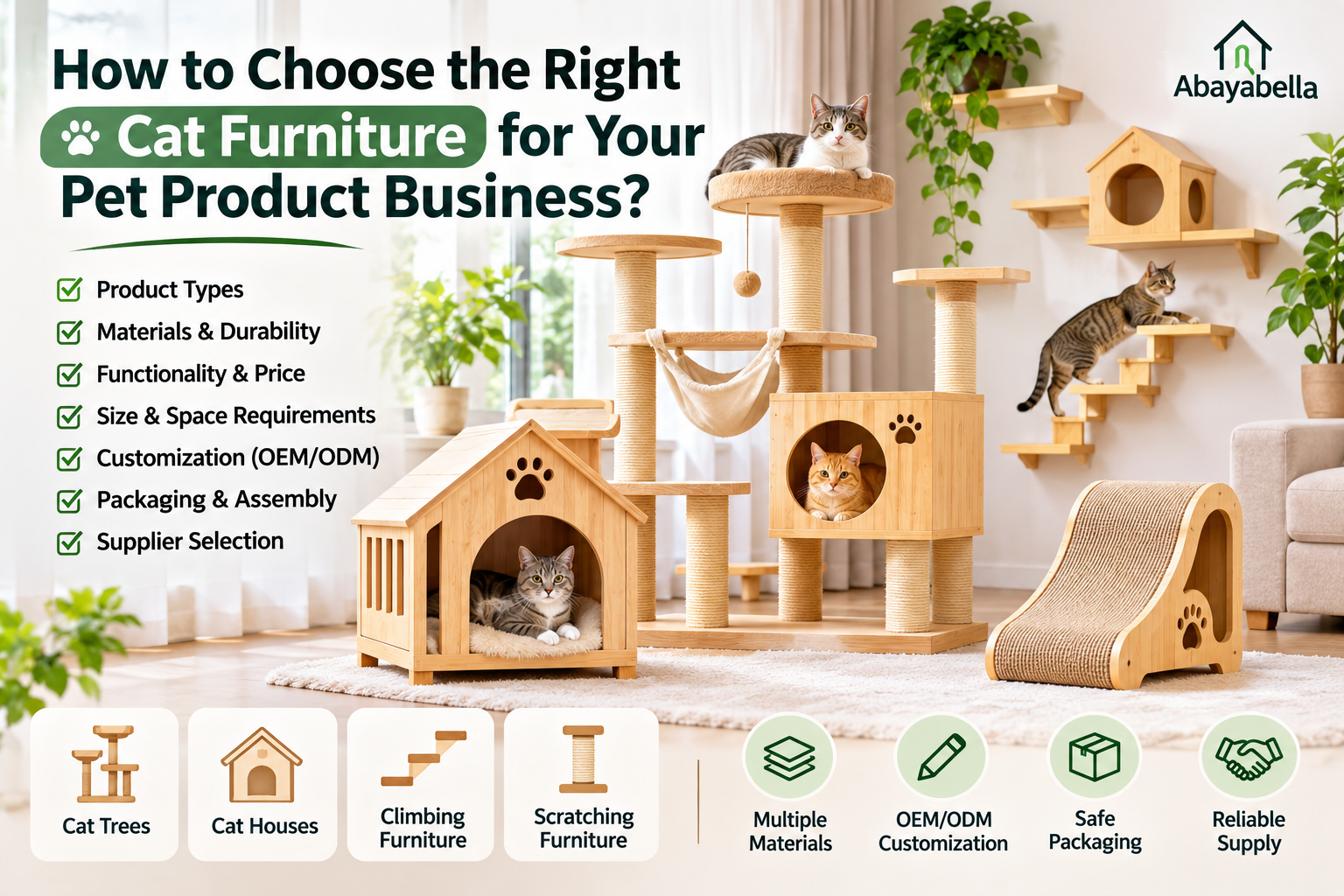
Why Cat Furniture Is an Important Category in the Pet Market
The demand for cat furniture continues to create opportunities for pet product retailers, wholesalers, distributors, and brands. As more consumers treat cats as family members, they are increasingly interested in products that provide comfort, entertainment, exercise, and a suitable living environment for their pets.
For businesses in the pet industry, choosing the right cat furniture is not simply about finding attractive products. It requires understanding customer preferences, product functionality, material quality, retail positioning, and manufacturing capabilities.
A well-selected cat furniture collection can help businesses build a more competitive product line, attract different customer groups, and increase sales opportunities.
However, with so many designs and product types available, how can importers and retailers choose the right products for their markets?
Understand Your Target Customers and Market
Before selecting cat furniture, businesses should first understand their target customers.
Different customer groups may have very different expectations.
For example:
- Apartment owners often prefer compact cat furniture that saves space.
- Multi-cat households may need larger climbing structures with multiple platforms.
- Premium pet owners may prioritize attractive designs, durable materials, and higher-end finishes.
- Budget-conscious customers may prefer practical products with essential functions at competitive prices.
- Pet retailers may look for products with broad market appeal and reasonable retail margins.
Geographical markets also influence product preferences. Customers in different countries may have different expectations regarding product sizes, colors, materials, and retail prices.
For importers and distributors, understanding these differences is essential before placing bulk orders.
Instead of selecting products based only on appearance, businesses should consider whether each design matches their actual customer base.
Choose the Right Types of Cat Furniture
Cat furniture covers several different product categories. A successful product collection does not necessarily need to include every type, but it should offer products that meet different customer needs.
Cat Trees
Cat trees are among the most recognizable types of cat furniture. They usually combine platforms, scratching posts, resting areas, and climbing structures.
They are suitable for customers looking for multifunctional products that allow cats to climb, play, scratch, and rest.
Cat Houses
Cat houses provide private spaces where cats can sleep, hide, and relax. They are available in different sizes and designs, including enclosed structures and furniture-style products.
For retailers, cat houses can complement cat trees and other indoor pet furniture.
Cat Climbing Furniture
Climbing furniture allows cats to explore vertical spaces and exercise indoors. Products may include platforms, steps, wall-mounted shelves, and interconnected climbing structures.
These products can be particularly attractive to customers living in apartments where floor space is limited.
Cat Scratching Furniture
Scratching products help satisfy cats’ natural scratching instincts and provide opportunities for daily activity.
Businesses can consider standalone scratching products or designs integrated into cat trees and other furniture.
Offering different types of cat furniture can help retailers serve a broader range of customers rather than relying on a single product category.
Consider Materials, Design, and Durability
Material selection is an important factor when evaluating cat furniture.
The materials influence product appearance, structural stability, durability, production costs, and retail positioning.
Common materials include:
- Solid wood
- Plywood
- MDF
- Particleboard
- Natural sisal rope
- Fabric and plush materials
- Metal fittings and accessories
Each material has different characteristics and applications.
For example, wooden structures can provide a more furniture-like appearance, while sisal rope is commonly used for scratching surfaces. Fabric and plush materials can make resting areas more comfortable.
When selecting cat furniture, buyers should pay attention to the following details:
- Whether the structure is stable during climbing and jumping
- Whether platforms can support the expected weight
- Whether edges and corners are properly finished
- Whether scratching materials are securely attached
- Whether components are resistant to normal daily use
- Whether the materials are suitable for the intended application
Good design should combine appearance with practical functionality.
For businesses developing their own product collections, material selection should also consider the target retail price and manufacturing requirements.
Balance Functionality and Retail Price
A product with more features is not necessarily a better product.
Some cat furniture designs combine multiple platforms, enclosed houses, scratching posts, hammocks, and resting areas. While these features may increase product appeal, they can also increase manufacturing costs, packaging dimensions, and shipping expenses.
For importers and wholesalers, the challenge is finding the right balance between functionality and commercial value.
Consider these questions:
- Does the product offer functions customers actually need?
- Is the design suitable for the target retail price?
- Can unnecessary components be removed without affecting functionality?
- Is the product easy to assemble?
- Can the packaging be optimized for international transportation?
A practical product with a well-designed structure may perform better commercially than an unnecessarily complicated design.
When evaluating cat furniture, buyers should consider the total landed cost rather than focusing only on the factory quotation.
Pay Attention to Product Size and Space Requirements
Product dimensions can have a significant impact on purchasing decisions.
Large cat trees may offer more climbing and resting opportunities, but they also require more floor space. Smaller designs are easier to position in compact homes but may provide fewer functions.
Retailers should consider offering several size options to serve different customer groups.
For example:
- Small cat furniture for apartments and limited spaces
- Medium-sized cat trees for everyday indoor use
- Large multi-level structures for multi-cat households
- Wall-mounted climbing systems for customers who want to save floor space
Packaging dimensions are equally important for B2B buyers.
Large products can occupy considerable container space, potentially increasing international shipping costs. Flat-pack structures and knock-down designs may help improve packaging efficiency.
A manufacturer with product development experience can help optimize dimensions and structures while maintaining the product’s intended functionality.
Look for Customization and OEM/ODM Options
For pet brands and retailers, selling exactly the same products as competitors can make it difficult to establish a distinctive market position.
This is why customization has become an important consideration when sourcing cat furniture.
Depending on manufacturing capabilities, buyers may customize:
- Product dimensions
- Structural designs
- Colors and finishes
- Material combinations
- Scratching components
- Fabric and accessories
- Packaging designs
- Brand logos and labels
OEM manufacturing allows buyers to develop products according to their own specifications, while ODM manufacturing can provide opportunities to adapt existing designs or develop products with the manufacturer’s support.
For example, a pet brand may want to develop a wooden cat tree with a specific color scheme, a different platform arrangement, and branded packaging.
Working with a supplier that understands both product design and manufacturing can make this process more efficient.
For more information about developing customized products, see How Custom Wooden Furniture Helps Retailers Stand Out.
Evaluate Packaging and Assembly Requirements
Packaging is sometimes overlooked during product selection, but it can directly affect transportation costs and customer satisfaction.
Cat furniture often contains multiple components that need to be assembled. Poor packaging or unclear assembly instructions can lead to damaged components, missing accessories, or difficulties for end customers.
Before approving a product, buyers should evaluate:
Packaging Protection
Check whether the packaging adequately protects panels, platforms, fittings, and decorative components during transportation.
Packaging Efficiency
Consider whether the product can be disassembled or packed flat to reduce shipping volume.
Assembly Instructions
Make sure the product includes clear instructions and all necessary hardware.
Retail Presentation
For branded products, packaging should reflect the brand’s positioning and provide customers with a professional unboxing experience.
A well-designed packaging solution can improve the overall value of cat furniture, particularly for businesses selling through e-commerce channels.
Work with a Reliable Cat Furniture Supplier
Finding the right cat furniture is only one part of the purchasing process. Choosing a reliable supplier is equally important.
For international buyers sourcing from China, several factors deserve attention.
Product Development Capability
Can the supplier support customized designs and modifications?
Sample Quality
Does the sample accurately represent the expected bulk production quality?
Production Consistency
Can the supplier maintain consistent materials, dimensions, finishes, and assembly quality across larger orders?
Communication
Can the supplier understand product specifications and respond clearly to technical requirements?
Export Experience
Does the supplier understand packaging, documentation, and international shipping requirements?
Buyers should not evaluate a supplier based solely on product photographs or the lowest quotation.
Samples, technical discussions, and production arrangements can provide a much clearer picture of the supplier’s capabilities.
You can also read our guide on How to Choose a Reliable Wooden Furniture Manufacturer in China for additional considerations when evaluating manufacturing partners.
Consider Expanding Your Pet Product Collection
Cat furniture can be an important category, but businesses do not necessarily need to limit their purchasing strategy to cat-related products.
Retailers, distributors, and wholesalers may also benefit from offering complementary pet products.
Depending on their target markets, businesses could consider:
- Wooden dog houses
- Rabbit hutches
- Pet beds
- Pet feeding stations
- Other indoor pet furniture
- Outdoor pet products
Expanding product categories can help retailers serve more customer needs and create additional sales opportunities.
However, managing multiple product categories may involve coordinating different manufacturers and suppliers.
Working with a sourcing partner that understands the broader pet product market can help simplify procurement.
Learn more about One-Stop Pet Products Sourcing and how it can support businesses looking for a wider range of pet products from China.
How Abayabella Supports Cat Furniture Buyers
At Abayabella, we understand that international buyers need more than attractive product designs. They need products that meet market requirements and suppliers who can support their business development.
We provide wooden pet product manufacturing, OEM/ODM, and customized product development for international customers.
Our capabilities include:
- Wooden cat furniture and cat trees
- Wooden pet houses
- Wooden rabbit hutches
- Customized wooden pet products
- OEM/ODM manufacturing
- Product development and sampling
- One-stop pet product sourcing in China
Whether you are a pet product distributor looking for new products, a retailer developing a private-label collection, or a brand planning a customized cat furniture range, we can help explore suitable manufacturing and sourcing solutions.
Our goal is to support buyers from initial product ideas and sample development through manufacturing and broader sourcing requirements.
Visit Abayabella to learn more about our products and capabilities.
Final Thoughts
Choosing the right cat furniture requires more than comparing product designs and prices.
For pet product businesses, successful product selection involves understanding target customers, evaluating materials and functionality, considering packaging requirements, and working with suppliers capable of supporting long-term product development.
A well-planned cat furniture collection can help retailers differentiate their product offerings and create more opportunities in the growing pet industry.
For importers, wholesalers, distributors, and pet brands sourcing from China, the right manufacturing and sourcing partner can make a meaningful difference.
Abayabella supports international buyers with wooden cat furniture, customized pet products, OEM/ODM manufacturing, and one-stop China sourcing.