
Blog
How to Choose a Rabbit Hutch
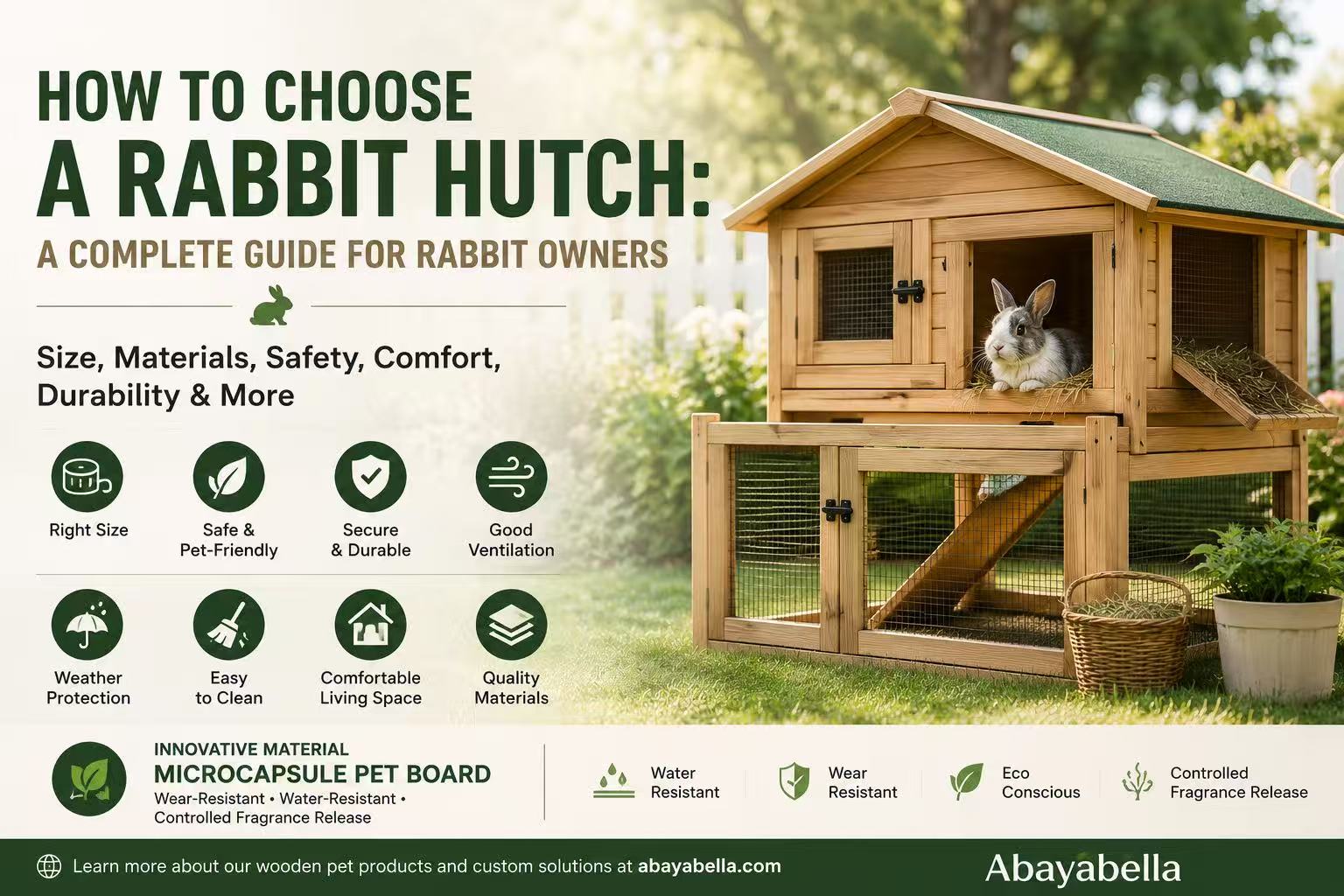
How to Choose a Rabbit Hutch: A Practical Guide to Size, Materials, Safety, Comfort, and Durability
Choosing the right rabbit hutch is an important part of creating a safe and comfortable home for your rabbit. A well-designed hutch should provide enough space for movement, resting, eating, hiding, and natural behaviors while also protecting your rabbit from weather and environmental hazards.
However, with so many different designs, sizes, and materials available, how to choose a rabbit hutch can be difficult for first-time rabbit owners.
In this guide, we’ll explain the most important factors to consider, including size, ventilation, materials, weather resistance, cleaning, security, comfort, and long-term durability. We’ll also look at how innovative pet-friendly board materials can create new possibilities for modern rabbit housing.
What Makes a Good Rabbit Hutch?
How to Choose a Rabbit Hutch That Supports Natural Rabbit Behavior
A good rabbit hutch should be more than a small shelter. Rabbits need space to move, stretch, rest, hide, eat, and explore.
Therefore, a well-designed enclosure should provide:
- Adequate living space
- Good ventilation
- Protection from rain and wind
- Shade from direct sunlight
- A comfortable resting area
- A secure sleeping space
- Easy access for cleaning
- Strong structural construction
- Protection from predators
In addition, the design should allow the rabbit to move naturally between different areas.
Ultimately, the best enclosure is one that balances animal welfare, safety, durability, maintenance, and practical design.
1. Choisir la bonne taille
How to Choose a Rabbit Hutch Based on Rabbit Size and Activity
Size is one of the most important factors when choosing housing for rabbits.
A rabbit needs enough room to stand comfortably, stretch, turn around, lie down, and move between different areas. Furthermore, larger rabbits require proportionally more space.
If you have more than one rabbit, the enclosure should provide enough room for all of them without creating overcrowding.
When comparing different designs, consider:
- Overall floor area
- Interior height
- Door size
- Sleeping area
- Exercise area
- Number of rabbits
- Rabbit breed and adult size
For example, a small enclosure may appear suitable when a rabbit is young. However, the animal will grow, so it is better to consider its expected adult size before making a purchase.
Moreover, a larger enclosure can provide more opportunities for movement and environmental enrichment.
2. Consider Indoor or Outdoor Use
How to Choose a Rabbit Hutch for Different Living Environments
Before selecting a design, determine where the enclosure will be used.
Indoor rabbit housing has different requirements from an outdoor hutch.
For indoor use, you may place greater emphasis on:
- Appearance
- Easy cleaning
- Floor protection
- Compact dimensions
- Integration with home interiors
Outdoor housing, on the other hand, needs stronger protection against changing weather conditions.
In particular, outdoor designs should consider:
- Rain
- Wind
- Humidity
- Direct sunlight
- Temperature changes
- Predators
Therefore, the intended environment should be one of the first decisions you make when choosing a rabbit hutch.
3. Choose Durable Materials
How to Choose a Rabbit Hutch With Long-Lasting Materials
The materials used in a rabbit hutch have a direct impact on its service life.
Common materials include:
- Solid wood
- Plywood
- Engineered wood
- Metal
- Wire mesh
- Plastic components
Wood is popular because it provides a natural appearance and can create a warm, comfortable environment.
However, outdoor rabbit housing can be exposed to moisture, dirt, scratching, chewing, and repeated cleaning. As a result, material selection becomes particularly important.
A suitable material should ideally provide:
- Good structural strength
- Wear resistance
- Moisture resistance
- Easy maintenance
- Stable performance
- Appropriate surface treatment
Furthermore, the connections between different materials are just as important as the materials themselves.
4. Look for Pet-Friendly and Eco-Friendly Materials
How to Choose a Rabbit Hutch With Safer Materials
Rabbits interact closely with their living environment. They may touch, scratch, chew, or rub against different parts of their enclosure.
Consequently, material selection should take both animal contact and the surrounding environment into consideration.
Ideally, rabbit furniture and housing materials should combine:
- Pet-friendly performance
- People-friendly indoor use
- Environmental considerations
- Durability
- Moisture resistance
- Wear resistance
- Easy cleaning
In addition, manufacturers should consider the entire material system rather than focusing only on appearance.
Microcapsule Pet Board for Modern Rabbit Housing
Traditional wood-based boards primarily provide structural support. However, material innovation can introduce additional functional properties into pet furniture and animal housing.
At Abayabella, we are developing microcapsule pet boards for modern pet living applications.
The concept combines engineered board technology with microcapsule technology. Depending on the formulation and application, the material can be designed to provide several useful characteristics.
Pet-Friendly and People-Friendly
The material is developed with shared living environments in mind, considering both animals and the people who interact with the furniture.
Eco-Conscious
Environmental considerations can be incorporated into the development and manufacturing process while maintaining the performance required for everyday applications.
Wear-Resistant
Rabbit housing can experience repeated contact, scratching, movement, and everyday wear. Therefore, a wear-resistant board can help extend the service life of the finished product.
Water-Resistant
Moisture resistance is particularly useful for outdoor rabbit housing and areas that require frequent cleaning.
For example, water-resistant surfaces can help reduce the impact of occasional spills, humidity, and routine cleaning.
Controlled Fragrance Release
Microcapsule technology can encapsulate selected fragrance ingredients within microscopic capsules. Under appropriate conditions, friction or external stimulation can trigger gradual fragrance release.
This creates an opportunity to make the board a functional component rather than simply a structural panel.
For pet product manufacturers, retailers, and brands, innovative materials such as microcapsule pet boards can create opportunities for differentiated rabbit hutches and premium pet housing.
5. Make Sure There Is Good Ventilation
How to Choose a Rabbit Hutch With Proper Airflow
Good ventilation is essential for a comfortable rabbit living environment.
An enclosure should allow fresh air to circulate while still providing protection from strong wind, rain, and extreme weather.
Therefore, look for designs with:
- Ouvertures d'aération
- Appropriate mesh areas
- Airflow between different sections
- Protected sleeping spaces
- Good separation between living and enclosed areas
However, ventilation does not mean exposing rabbits directly to strong drafts.
A good design should create airflow without making the resting area uncomfortable.
6. Protect Rabbits From Weather
How to Choose a Rabbit Hutch for Outdoor Conditions
Outdoor rabbit housing needs to provide protection from changing weather.
Rain and humidity can damage unsuitable materials over time. Meanwhile, excessive sunlight can make enclosed spaces uncomfortably hot.
For outdoor use, consider:
- A waterproof or water-resistant roof
- Raised flooring
- Protected sleeping areas
- Weather-resistant materials
- Adequate shade
- Good drainage
- Secure doors
In addition, the hutch should be positioned in a suitable location.
Avoid placing it in areas that are constantly exposed to direct sunlight, heavy rain, or strong winds.
7. Prioritize Security
How to Choose a Rabbit Hutch That Helps Protect Against Predators
Outdoor rabbits may be vulnerable to predators and other animals.
Therefore, security should be an important part of the design.
Look for:
- Strong doors
- Reliable latches
- Secure wire mesh
- Strong structural connections
- Protected openings
- Raised or reinforced areas where appropriate
Small gaps should also be carefully considered because rabbits and other animals may attempt to squeeze through them.
For outdoor applications, a secure structure provides an additional layer of protection when rabbits are resting or sleeping.
8. Make Cleaning Easy
How to Choose a Rabbit Hutch That Is Easy to Maintain
Cleaning is an essential part of maintaining a healthy living environment.
Rabbit housing can accumulate bedding, fur, food particles, and waste. Therefore, easy access to the interior is extremely useful.
Recherchez des caractéristiques telles que
- Grandes portes d'accès
- Plateaux amovibles
- Easy-to-clean surfaces
- Accessible sleeping areas
- Practical drainage
- Replaceable components
Moreover, moisture-resistant surfaces can make regular cleaning more convenient.
A well-designed enclosure should allow owners to clean frequently without having to dismantle the entire structure.
9. Provide Separate Areas for Different Activities
How to Choose a Rabbit Hutch With a Functional Layout
Rabbits benefit from having different areas for different activities.
For example, a well-planned enclosure can include:
Sleeping area: a quiet and protected space for rest.
Feeding area: a dedicated location for food and water.
Exercise area: additional room for movement and exploration.
Hiding area: a private space where the rabbit can retreat.
Toilet area: a designated location that makes cleaning easier.
By separating these areas, the enclosure can become more functional and easier to maintain.
Furthermore, a multi-area design can make better use of available space.
10. Consider the Floor Design
How to Choose a Rabbit Hutch With a Comfortable Floor
The floor is another important consideration.
A rabbit should have a comfortable surface that supports normal movement and resting.
At the same time, the floor should be durable enough to withstand regular cleaning and daily use.
Consider:
- Surface texture
- Structural strength
- Moisture resistance
- Ease of cleaning
- Comfort
- Drainage
Avoid designs that create uncomfortable or unsafe surfaces for extended periods.
Instead, choose a floor system that balances comfort, hygiene, durability, and practical maintenance.
11. Think About Long-Term Durability
How to Choose a Rabbit Hutch for Long-Term Value
Price is important, but it should not be the only factor.
A cheaper enclosure may use thinner boards, weaker connections, or materials that are not suitable for long-term outdoor exposure.
Consequently, the initial purchase price does not always represent the total cost of ownership.
Ask yourself:
Will this rabbit hutch remain stable, functional, and attractive after years of daily use?
A more durable product may have a higher initial cost. However, it can provide better long-term value by reducing maintenance and replacement requirements.
For manufacturers and retailers, durability can also improve customer satisfaction and reduce product returns.
How to Choose the Best Rabbit Hutch: Quick Checklist
A Simple Checklist Before You Buy
Before purchasing a rabbit hutch, consider the following:
- Is there enough space for the rabbit?
- Is the interior height appropriate?
- Is the structure stable?
- Is ventilation adequate?
- Is there protection from rain and sunlight?
- Are the materials durable?
- Are the materials pet-friendly?
- Is the floor comfortable and practical?
- Is the enclosure easy to clean?
- Is it secure against predators?
- Is it suitable for long-term use?
If most of these answers are yes, you are more likely to choose housing that provides a comfortable and practical environment for your rabbit.
Frequently Asked Questions About Rabbit Hutches
Answers to Common Questions
What Is the Best Material for a Rabbit Hutch?
There is no single material that is best for every application. Solid wood, plywood, engineered wood, metal, and other materials can all be suitable depending on the design and environment.
However, durability, moisture resistance, structural strength, safety, and ease of maintenance should always be considered.
How Big Should a Rabbit Hutch Be?
The appropriate size depends on the rabbit’s breed, adult size, activity level, and the number of rabbits sharing the space.
In general, larger housing provides more opportunities for movement and enrichment.
Can a Rabbit Hutch Be Used Outdoors?
Yes, many hutches are specifically designed for outdoor use. However, outdoor housing should provide adequate protection from rain, wind, sunlight, humidity, and predators.
Therefore, weather-resistant construction and proper placement are particularly important.
What Should I Look for in a Durable Rabbit Hutch?
Look for strong structural materials, secure connections, weather-resistant surfaces, good ventilation, reliable doors, and materials that can withstand repeated cleaning and everyday use.
How Can I Make a Rabbit Hutch Easier to Clean?
Choose a design with large access doors, removable components, practical drainage, and easy-to-clean surfaces. Additionally, moisture-resistant materials can simplify routine maintenance.
Final Thoughts
How to Choose a Rabbit Hutch That Works for Rabbits and Their Owners
Choosing the right housing means looking beyond appearance and price.
A good rabbit hutch should combine adequate space, safety, ventilation, weather protection, durability, comfort, and easy maintenance.
For rabbit owners, material selection is especially important because the enclosure becomes part of the animal’s everyday living environment.
Meanwhile, for pet product manufacturers and brands, innovative materials can create new opportunities for improving the performance and differentiation of modern rabbit housing.
Materials such as microcapsule pet boards can potentially combine pet-friendly performance, environmental considerations, wear resistance, water resistance, and controlled fragrance release in innovative pet furniture and housing applications.
Ultimately, a well-designed enclosure should do more than provide shelter.
It should create a safe, comfortable, durable, and thoughtfully designed environment where rabbits can live naturally and their owners can enjoy easier long-term care.
Contact Abayabella
Looking for Custom Rabbit Hutches or Innovative Pet Board Materials?
If you are a pet product brand, manufacturer, retailer, distributor, or designer looking for OEM manufacturing, custom rabbit hutches, wooden pet products, or innovative pet-friendly board materials, contact Abayabella to discuss your project.
We manufacture wooden pet products and develop innovative materials for modern pet living spaces.
Website: abayabella.com
Watch our video: Abayabella on YouTube
We welcome inquiries about OEM, custom manufacturing, and pet furniture material solutions.
A good rabbit hutch should provide more than just shelter. Space, ventilation, security, and easy access for cleaning are all important factors that are sometimes overlooked.