
Blog
Why OEM and Custom Manufacturing Matters for Wooden Products
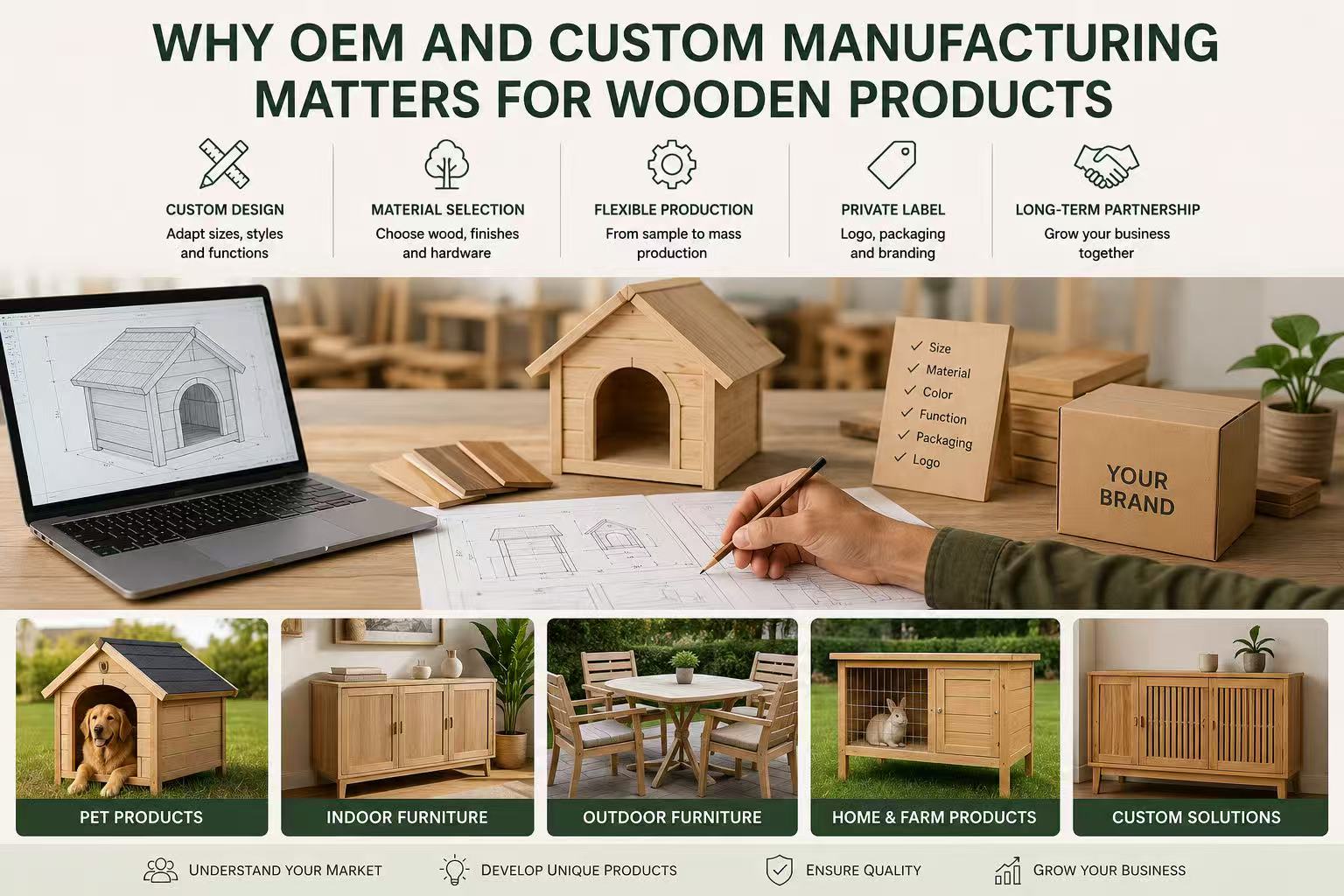
For B2B buyers, finding a wooden products manufacturer is only the first step. In many cases, the real challenge is finding a manufacturing partner that can adapt products to different markets, customer preferences, and business requirements.
Standard products can be useful when buyers need ready-made solutions. However, fixed sizes, materials, colors, and designs do not always match a company’s target market. This is where OEM and custom manufacturing for wooden products become increasingly important.
Whether a business is sourcing pet products, indoor furniture, outdoor furniture, or home and farm products, flexibility can make a significant difference. A reliable manufacturer should not only produce existing products but also support product development according to specific requirements.
Different Markets Require Different Products
Consumer preferences vary from market to market. A product that performs well in one country may require changes before it becomes suitable for another.
For example, customers may prefer different:
- Product sizes
- Colors and finishes
- Materials
- Structural designs
- Packaging
- Assembly methods
- Functional features
Therefore, buyers often need more than standard products.
OEM and custom manufacturing allow companies to adapt wooden products according to their market positioning. A wooden dog house designed for a European garden may have different requirements from a product developed for the North American market. Similarly, indoor furniture may need different dimensions, styles, or finishes depending on the target customer.
For this reason, flexibility in manufacturing has become an important part of product development.
OEM Manufacturing Helps Brands Build Their Own Product Range
OEM manufacturing gives brands the opportunity to develop products under their own identity.
Instead of selling the same standard products as competitors, companies can work with manufacturers to create products that better match their brand positioning.
Customization may include:
- Product dimensions
- Materials
- Colors
- Surface finishes
- Structural details
- Product functions
- Packaging
- Private labels
For example, a pet brand may want to develop a wooden pet house with its own dimensions, color combination, and packaging. A furniture retailer may require a collection designed around a particular market style. Meanwhile, a distributor may need products adapted to specific shipping or assembly requirements.
These adjustments can help businesses create a more differentiated product range.
Learn more about our overall manufacturing capabilities on our Wooden Products Manufacturer.
Custom Manufacturing Is Important for Product Differentiation
Competition is increasing across pet products, furniture, home products, and outdoor categories. As a result, selling the same products as every other company can make differentiation difficult.
Custom manufacturing gives buyers more control over product development.
A standard wooden cat tree, for instance, can be modified through changes to its structure, dimensions, materials, or functional areas. A wooden dog house can be redesigned for different dog sizes, climates, or customer preferences. The same principle applies to indoor cabinets, outdoor furniture, and other wooden products.
Instead of competing only on price, businesses can create products with stronger individual characteristics.
This approach can be particularly useful for:
- Private-label brands
- Retail chains
- Importers
- Wholesalers
- Distributors
- E-commerce sellers
A product does not always need to be completely redesigned. Even practical modifications can help create a product that better fits a specific market.
Materials and Finishes Can Be Customized
The appearance and performance of wooden products are strongly influenced by material selection and surface treatment.
Different applications may require different solutions.
Indoor furniture may focus more on appearance, texture, and compatibility with interior design. Outdoor products often require greater attention to moisture resistance and weather exposure. Pet products may require a balance between durability, practicality, and visual appeal.
Through custom manufacturing, buyers can discuss requirements for:
- Wood and board materials
- Surface finishes
- Colors
- Coatings
- Hardware
- Product structures
This allows the manufacturing process to better reflect the intended use of the final product.
For example, businesses sourcing Custom Indoor Furniture may require different finishes and dimensions depending on their market. Outdoor buyers may have different priorities when developing Outdoor Wooden Furniture.
The ability to discuss these details before production is an important advantage of working with an experienced custom manufacturer.
OEM Creates More Opportunities in the Pet Products Market
The pet products market has become increasingly diverse. Pet brands are developing products for different animal types, home environments, lifestyles, and price segments.
As a result, standard products may not always provide enough flexibility.
OEM manufacturing allows pet companies to develop products such as:
- Wooden dog houses
- Cat trees
- Rabbit hutches
- Chicken coops
- Pet furniture
- Other custom wooden pet products
A buyer may need a compact product for an online retail channel, while another customer may prefer a larger design for physical stores. Some brands may focus on premium materials and appearance, whereas others may prioritize practical packaging and efficient transportation.
Custom manufacturing makes it possible to develop products around these different business requirements.
You can also explore our existing Pet Furniture range to see how wooden products can be developed across different pet categories.
Customization Supports Indoor and Outdoor Product Development
OEM and custom manufacturing are not limited to pet products.
Indoor furniture can require significant customization because customers may have different preferences for dimensions, layouts, colors, and storage functions. Products such as wardrobes, cabinets, bookcases, bathroom cabinets, wooden doors, and bedside tables often need to fit specific market requirements.
Outdoor furniture also benefits from flexible development.
Different regions have different climates, living spaces, and garden styles. Consequently, a manufacturer may need to adjust product dimensions, materials, finishes, or structures to meet customer expectations.
Custom manufacturing gives buyers the ability to create a more consistent product range rather than selecting unrelated standard products from multiple suppliers.
Home and Farm Products Also Require Flexibility
Home and farm products can involve different customer needs depending on their intended use.
A retailer may require products designed for gardens and backyards, while another buyer may focus on practical products for farms or rural environments.
Product dimensions, structures, materials, and packaging may therefore need to be adjusted.
Flexible manufacturing makes it easier to develop products that match these different requirements.
For buyers developing broader product ranges, working with one manufacturer capable of supporting multiple categories can also simplify communication and product development.
You can learn more about these categories through our Home & Farm Ranch products.
Communication Is a Key Part of Custom Manufacturing
Successful OEM projects depend on more than production equipment.
Clear communication between the buyer and manufacturer is essential.
Before production begins, both sides should discuss important details such as:
- Product drawings
- Dimensions
- Materials
- Product functions
- Surface treatment
- Packaging
- Branding requirements
- Quality expectations
Changes made during the planning stage are usually easier to manage than changes made after mass production has started.
For this reason, buyers should look for manufacturers that can communicate clearly about product requirements and provide practical feedback during the development process.
A good manufacturing partner should understand not only how to produce a product but also how to identify potential manufacturing challenges before production begins.
OEM Manufacturing Can Support Long-Term Cooperation
Many B2B buyers do not want to change suppliers every time they develop a new product.
A long-term manufacturing relationship can make future product development more efficient.
Once a manufacturer understands a customer’s quality standards, product positioning, packaging requirements, and communication preferences, new projects can often move forward more smoothly.
Over time, cooperation may develop from producing one standard product to developing multiple customized product lines.
This is particularly valuable for businesses planning to expand their product ranges across different categories.
For example, a company may begin with wooden pet products and later explore indoor furniture, outdoor products, or other home and farm categories.
A manufacturer with broader wooden product capabilities can provide greater flexibility during this process.
Choosing the Right OEM Manufacturing Partner
When selecting a manufacturer, buyers should look beyond the product catalog.
Important questions include:
Can the manufacturer support custom dimensions and designs?
Is it possible to adjust materials and finishes?
Does the company have experience with different product categories?
Can the manufacturer provide practical feedback during product development?
Are communication and project management clear?
Can the supplier support future product development?
A good OEM partner should combine manufacturing capability with flexibility.
The goal is not simply to find a factory that can produce one product. The better long-term approach is to work with a manufacturer that can support product development as a business grows.
Final Thoughts
OEM and custom manufacturing matter because different markets require different products.
Standard products can provide a useful starting point, but customization gives brands, retailers, distributors, and importers greater control over product design and market positioning.
From wooden pet products and furniture to outdoor and home products, flexible manufacturing can help businesses develop products that better match their customers and commercial goals.
At Abayabella, we manufacture wooden products across multiple categories, including pet products, indoor furniture, outdoor furniture, and home and farm products. We support OEM and custom manufacturing based on customer requirements, from product concepts and specifications to materials, finishes, and packaging.
If you are looking for a flexible manufacturing partner for wooden products, explore more about Abayabella and our manufacturing capabilities.
Website: https://abayabella.com/
Watch our video: Abayabella on YouTube
Custom manufacturing is particularly valuable when entering a new market. Climate, consumer preferences, living spaces, and price positioning can all influence product requirements. A flexible OEM partner can help turn those requirements into practical products.
A good reminder that standard products don’t always work for every market. For distributors and retailers, having a manufacturer that can adjust designs and specifications can make product development much more efficient and help create products that better match local customer needs.